Those who receive money
The challenge
To respond to the evolving digital behaviour in traditional receive markets, WorldRemit wanted to better serve its customers who receive money.
My goal was to identify touch points across the core websites and mobile money transfer experience to better align with recipient customer needs, improving the overall experience of sending money internationally.
This strategic and disruptive redesign proposal would be released in 2 parts…
The first would focus on the design and development of services targeting WorldRemit customers. The second focus would be on B2B2C initiatives.
What I did
Workshops and mapping
Research
0-1 Design thinking
Mobile App design
Presentations
Service design
The methodology
Audit:
Starting with an in-depth analysis of user experience issues identified. I organised a kickoff and alignment workshop drawing a service map bringing stakeholders together. The WR service is similar to many in the remittance space optimising the product for senders. Marketing to western audiences can be expensive and in a crowded marketplace ineffective. Transaction flow requires senders to have a recipient account and address information to hand. Transactions sent with incorrect details can cause substantial delays and money to be locked in WRs correspondent network and third party refunds are slow and challenging. Customer service calls are expensive and unresolved CS calls represent absolute failure and a poor experience for users. Generating negative feedback and reviews.
Figure 1: remittance timeline
Figure 2: Assumption map
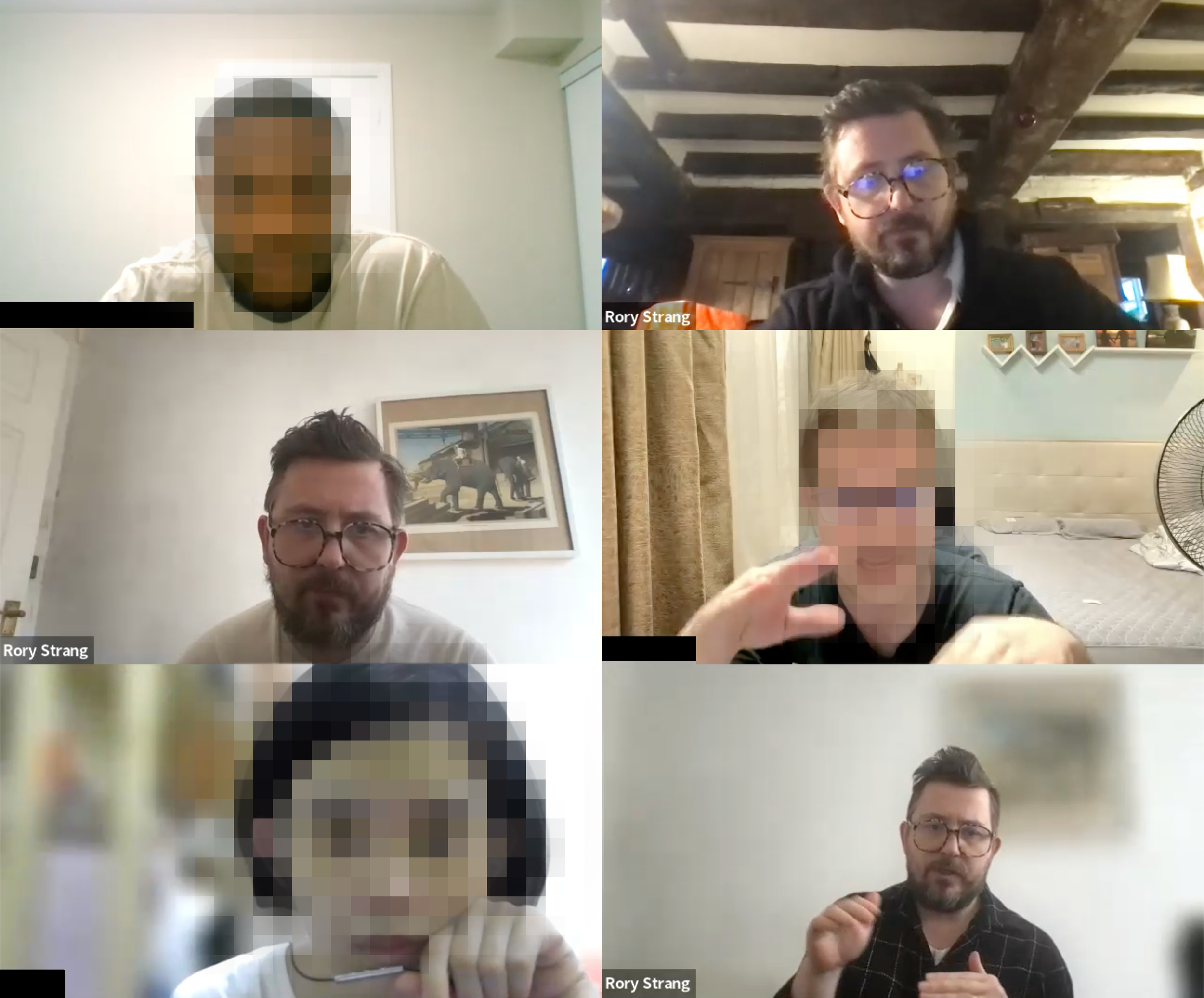
The methodology
Research:
*Of the unique phone numbers securely stored in the WorldRemit databases, 72% are associated with a user's account who has received money. *When speaking to customers through a series of qualitative research studies… I became more familiar with how users shared personal details online in family and friend chat groups. Communicated beforehand recipients define the terms of the transfer: service, method and its timeline being the most prevalent themes from the sessions I held.
Figure 3: Affinity map
Figure 4: Outcome interview
The methodology
Hypothesis:
Problem statement 1: As a new acquisition strategy could WR distinguish itself as a business focused on serving those who receive money. Working with local companies and leveraging relationships within our existing correspondent network, how might we build an experience that makes those receiving happier.
Problem Statement 2: Looking at the lifecycle of remittance WorldRemit services only cover a fraction of the broader user experience; the transaction. Can we find opportunities to expand the WR value prop out vertically to deliver greater value to customers. HMW start a transaction with the recipient so they might validate the details before the transaction is created, mitigating risk of errors or need for detail changes.
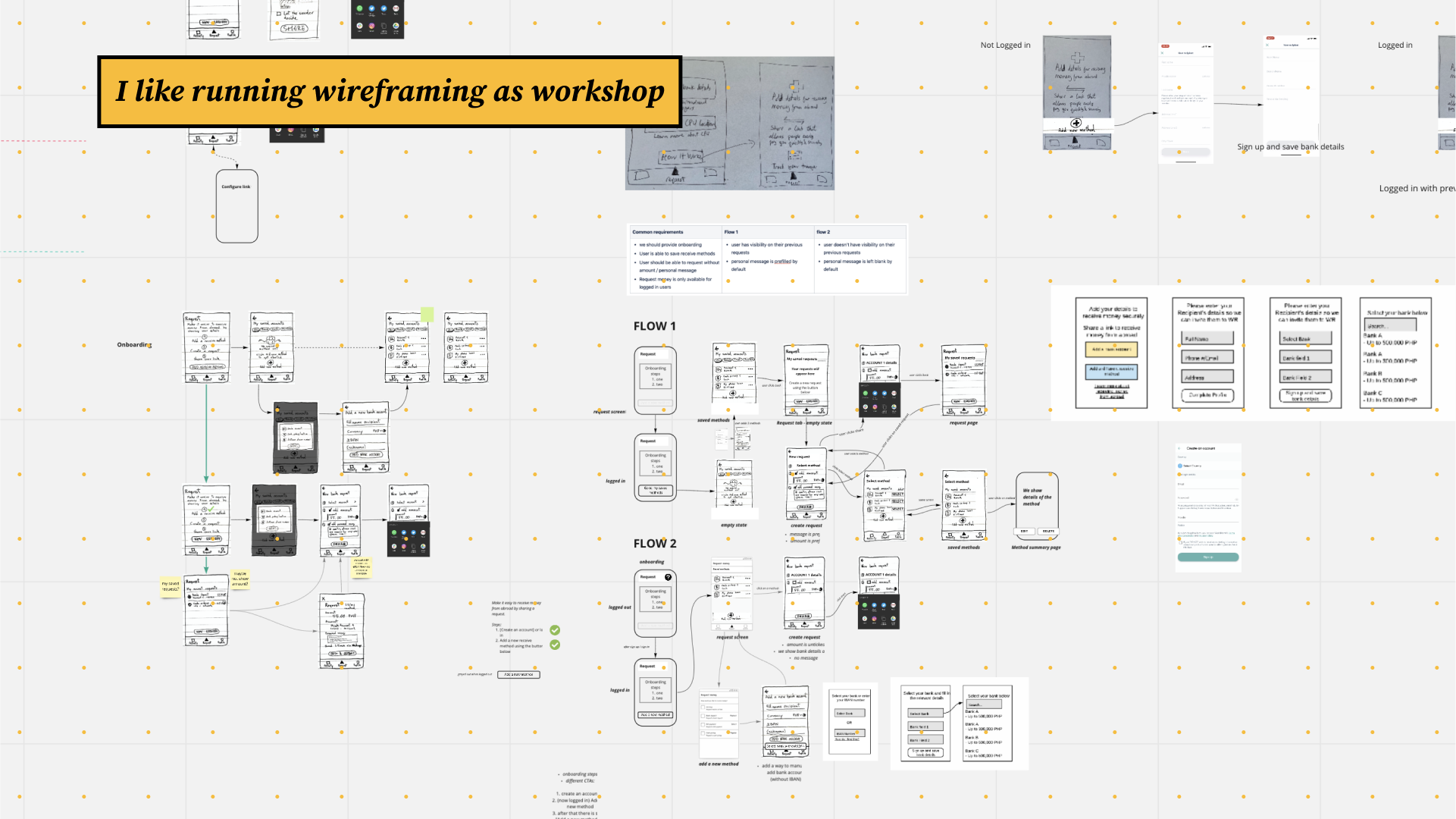
The methodology
Concept phase:
During this phase I explore and generate a range of solutions to solve the problem in the lowest possible fidelity. Over a few days I organised and ran a number of workshops with the product managers to generate ideas with the team starting with Crazy 8s but also drawing out a storyboard of ideas. Some of these ideas are then documented in a “WRIGLE” doc (WR UX canvas style doc) to help structure the idea and build business confidence in it.
Figure 5: WRIGLE example
Figure 6: User model
The methodology
Decision time:
Working with the wider product and technology teams I presented a number of ideas to stakeholders asking for guidance and to focus on the solutions which are most likely to solve the problem statement. In an informal session stakeholders can then use the forum to deliberate. Really useful for alignment. Candidates for development included…
Transfer tracker
Similar to products offered by logistics businesses, could we create a stand alone platform which enables all customers with a transfer ID to track the status of a transaction.
Targeting WR customers (account holders)
Wallet
A multi currency wallet/money holding service, a foundational service giving users choice and greater flexibility in how they pay out the money they receive.
A white label variant of a popular mobile money product
Targeting strategic partners, skin a regional mobile wallet product as WorldRemit.
Targeting those who receive money.
Request money service
Through analysis of transactions across our correspondent network the business was able to identify the most popular services in strategic markets.
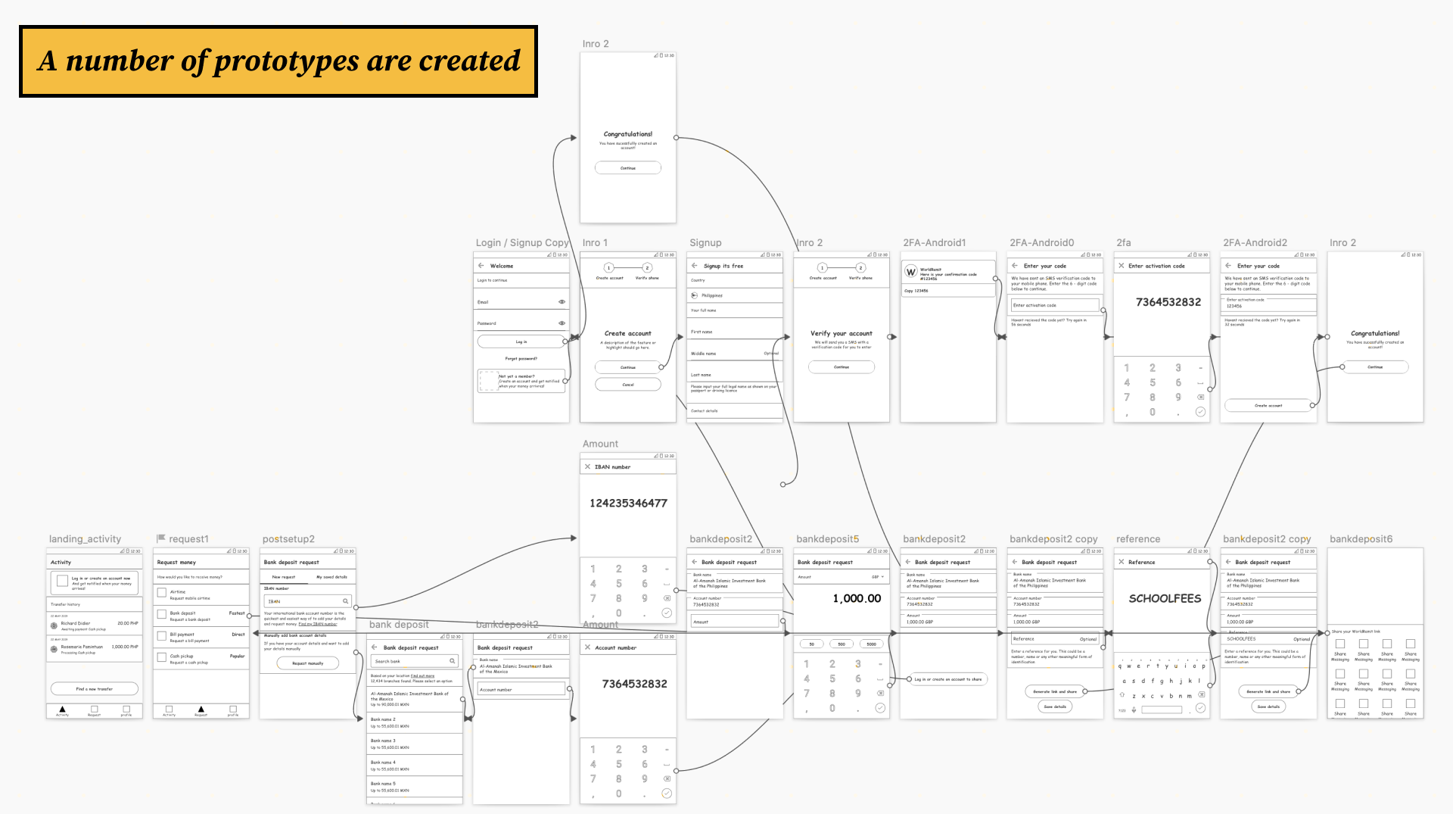
Targeting WR account holders
Transfer tracker
Making it easier for everyone to see exactly where their money is. The Transfer Tracker app was designed exclusively with recipients in mind. Launched first in Colombia, India, Mexico and Nigeria.
100k downloads, 84.6K users
Figure 7: Screenshots of the app
Figure 8: Reviews`
Targeting WR account holders
Wallet
Around 1.7 billion adults in the world who don't have access to a bank account or an account with a mobile money provider, and many of them live in rural areas without easy access. The product has been released across 5 countries; Philippines, Uganda, Ghana, Cameroon and Somaliland. The users in these countries are typically beneficiaries opening a wallet in these countries would allow this group of customers greater flexibility with the money they receive. Once money was received a wallet user could elect to select a portion of their funds to payout, send or exchange.
20k+ (20,180) active users, 56,346 transactions
Figure 9: Workflow looking at Cryptocurrency
Figure 10: Screenshots of the Wallet
Targeting those who receive money.
White label variant of a popular mobile money products
Working with my product team I put together a pitch deck and presented my UX ideas to senior decision makers within organisations across Africa and central America.
Working with some of these third partners I created prototypes of proposed skinned products including the necessary interactions and content to illustrate the concept and validate the proposition with customers.
Results from these interviews were inconclusive while feedback was positive, the brand recognition was poor. Why would customers choose our WR product variant over those they recognised in the marketplace? Those which are locally focused.
Figure 13: Example of Views
Figure 12: Example of Styleguide
Targeting those who receive money.
Request money service
We wanted to create a service (api) that our b2b partners could use to request money.
Working alongside a junior designer from my team I reviewed and catalogued the information from the previous stakeholder analysis.
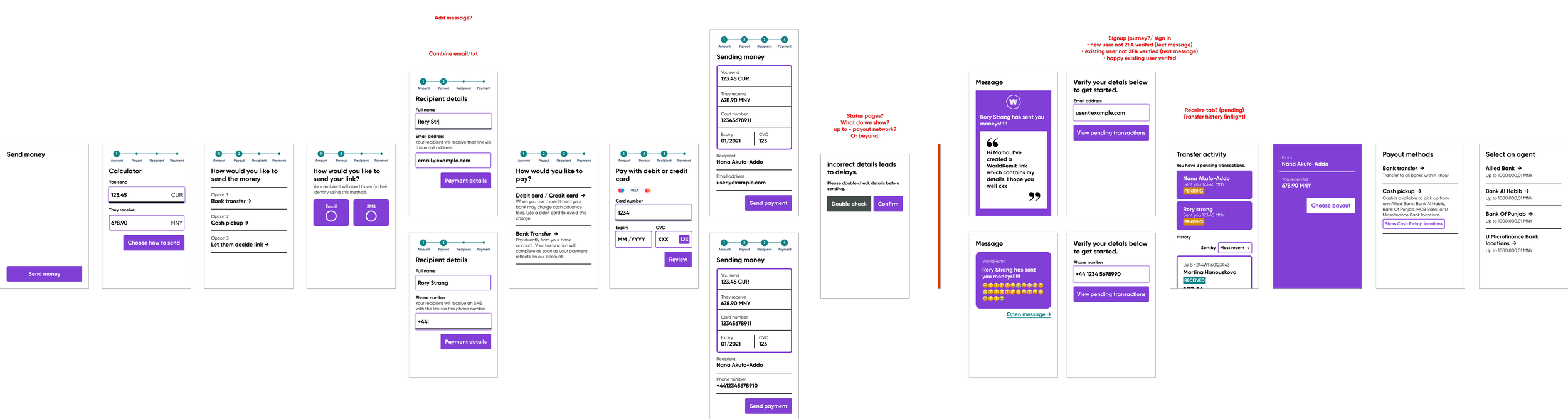
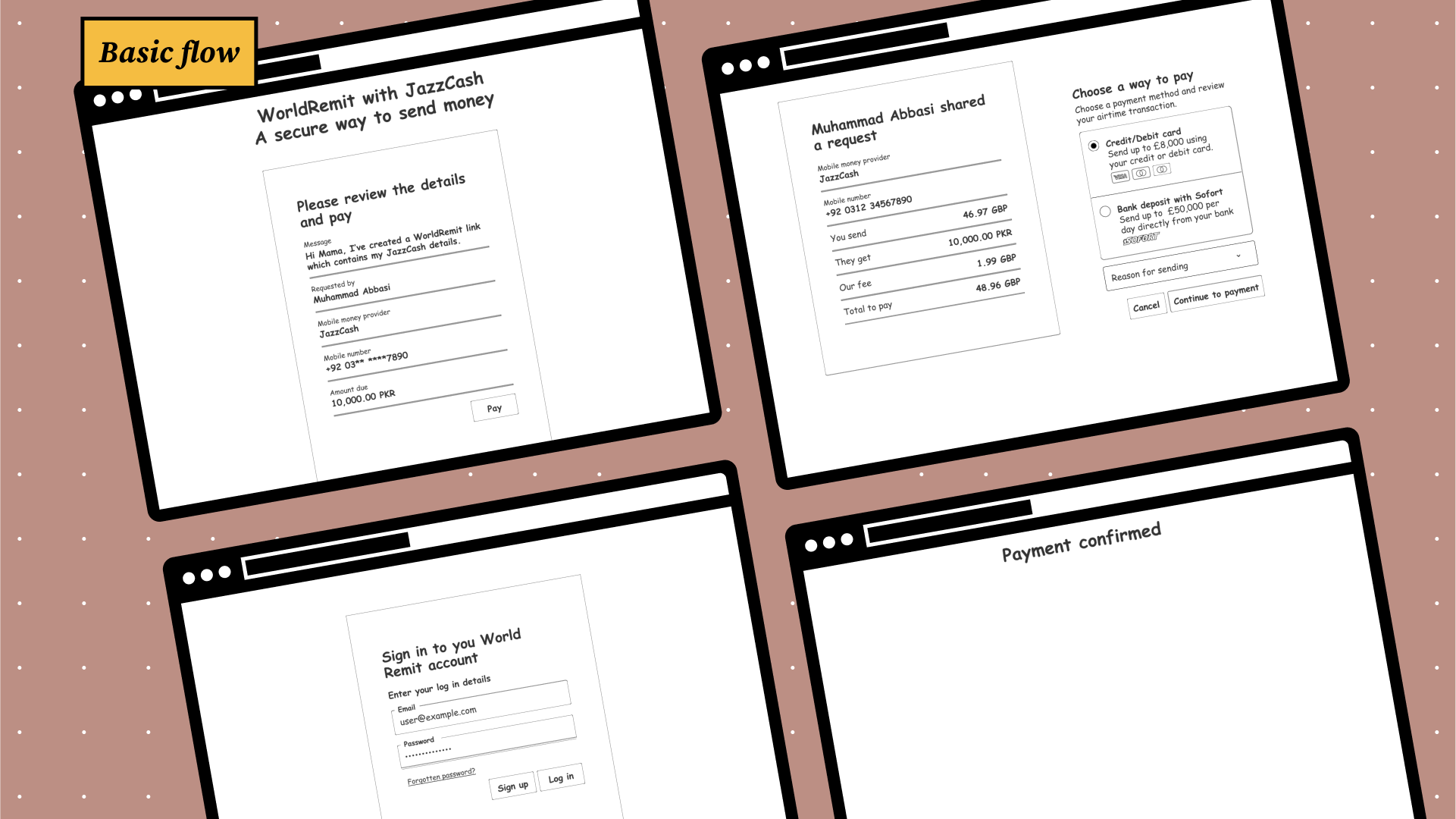
Starting with the recipient, could we securely enclose payment details from the 3rd party request. When receiving the request a sender would pass directly to a payment portal streamlining the transactional journey eliminating sender error and any need for this kind of sensitive information being shared.
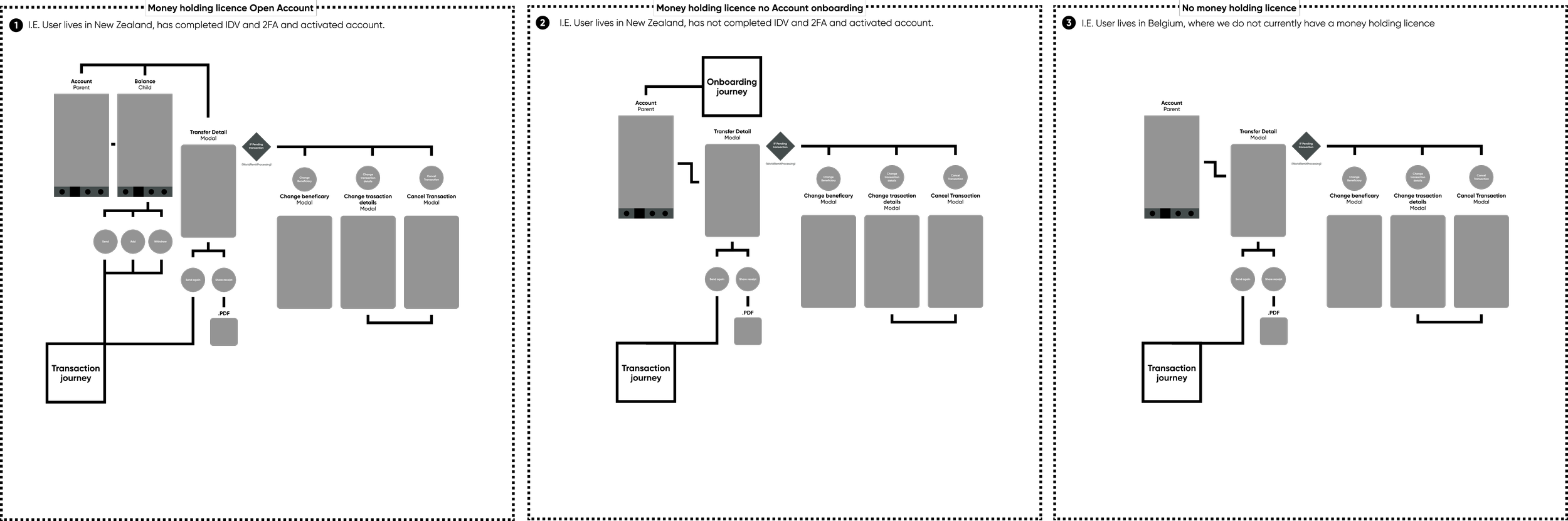
During a number of workshops with the broader technology team we drew a service map under our initial design flow identifying the necessary touch points between our frontend, backend and potential partner systems.
Figure 14: B2B Service map workshop
Targeting those who receive money.
Components
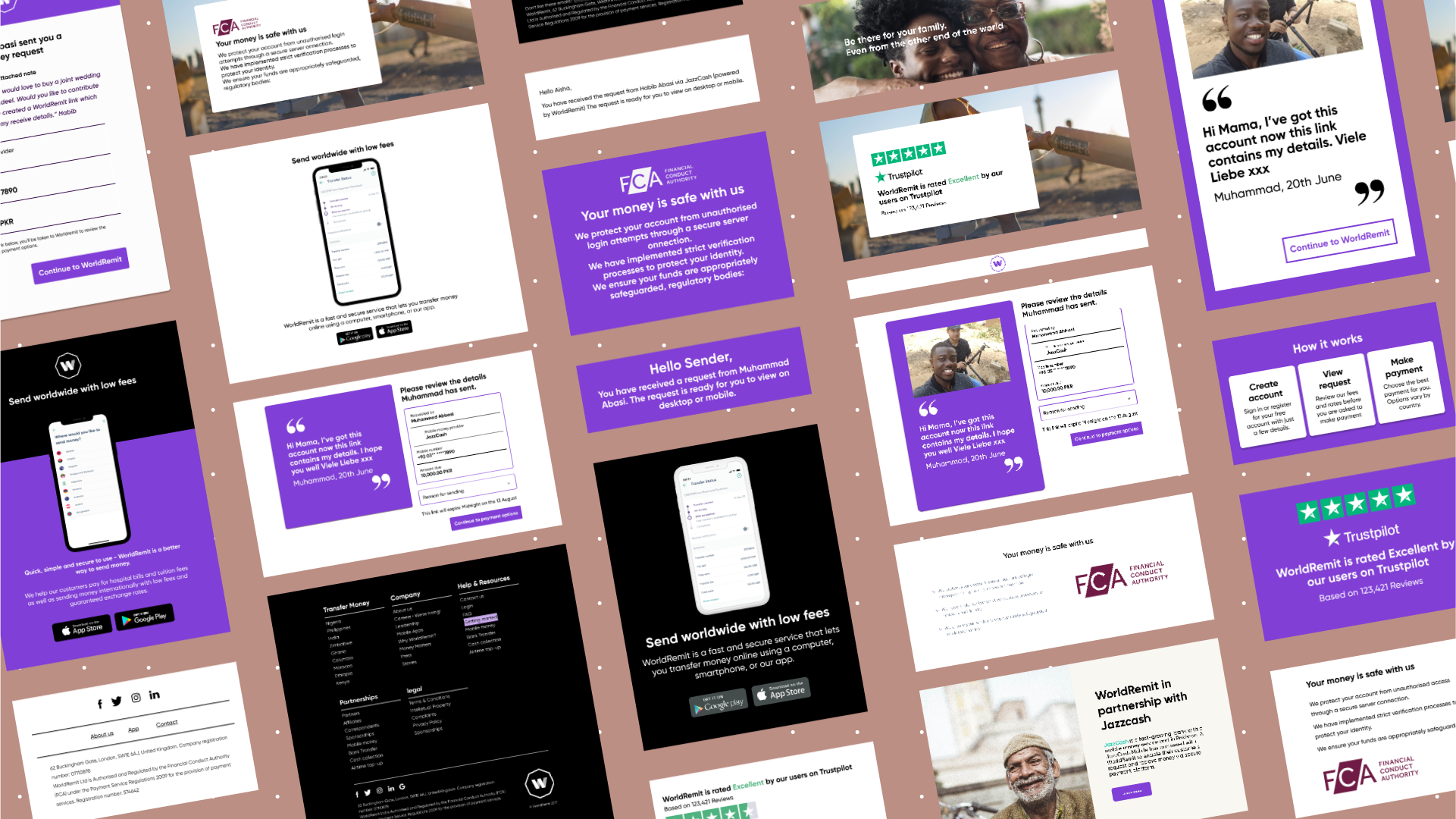
We broke down a list of components based on the themes identified in these workshops. This list was used as a basis of a series of quantitative research studies, asking candidates to indicate a preferred hierarchy. Firstly expressed as a card sorting exercise candidates were then asked to validate via a memory test.
Moving forward in iterative design-test-learn cycles we would update designs independently, reviewing all work in our daily project design meeting. Higher fidelity designs were drawn up following each workshop held. Some being exported for business/product team presentations with potential partners.
I ran sessions with Senders and Recipient users, and iterated on the flow based on insights and feedback until we reached a satisfactory version 1 solution.
Figure 15: Components for testing
Figure 16: Email headline testing.
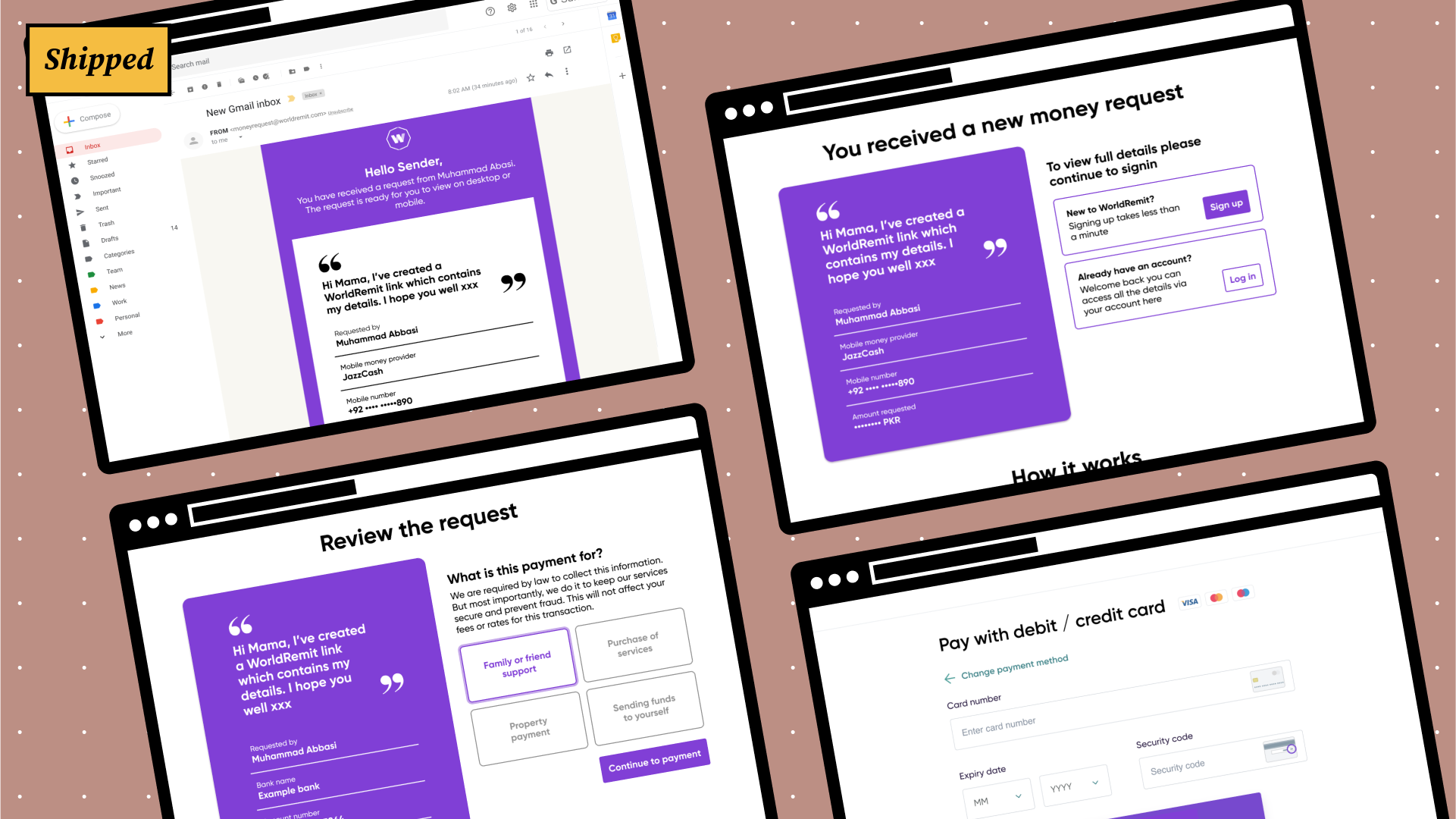
Targeting those who receive money.
Working with external businesses
Jazzcash, a mobile money provider in Pakistan, already has a relationship with WorldRemit, as well as with millions of WorldRemit recipient users..
Discussions with the Jazzcash team began on a weekly basis identifying pain points and generating a list of tasks and agenda items for next week.
Once I presented our Initial flow we gathered feedback working together with the Product team on both sides to resolve outstanding identified issues and generally working towards defining the final flow.
These changes were made as we learned more about the Jazzcash business and their customers. E.G. A lot of their users are gig economy workers who received payment for services from abroad. So we refined and formalised our feature away from traditional remittance to better support invoicing.
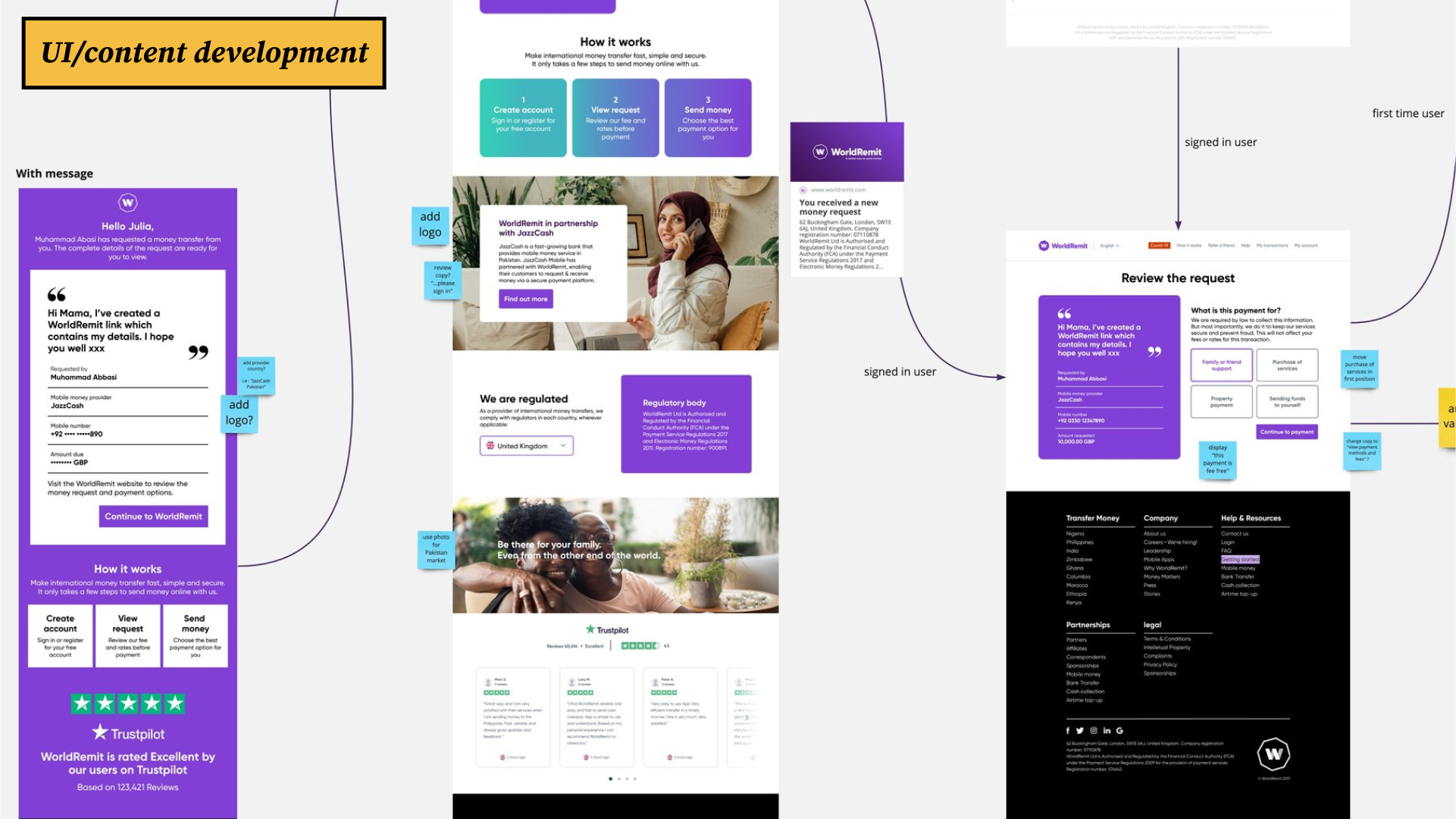
Figure 17: Higher fidelity mapping with notes
Figure 18: Finalised screenshots.
500 requests are created per week 65% of completed transactions are from senders who didn't have a WorldRemit account before.
Impact
Bill Payment via Paykii
Next steps
We integrated with this service so that WorldRemit to could facilitate the payments of bills and services from other Countries directly.
A “Recipient” first finds bill via online portal and then shares the bill page generated with those who send them money, the “Sender” is then directly taken though to a payment portal to make the payment.
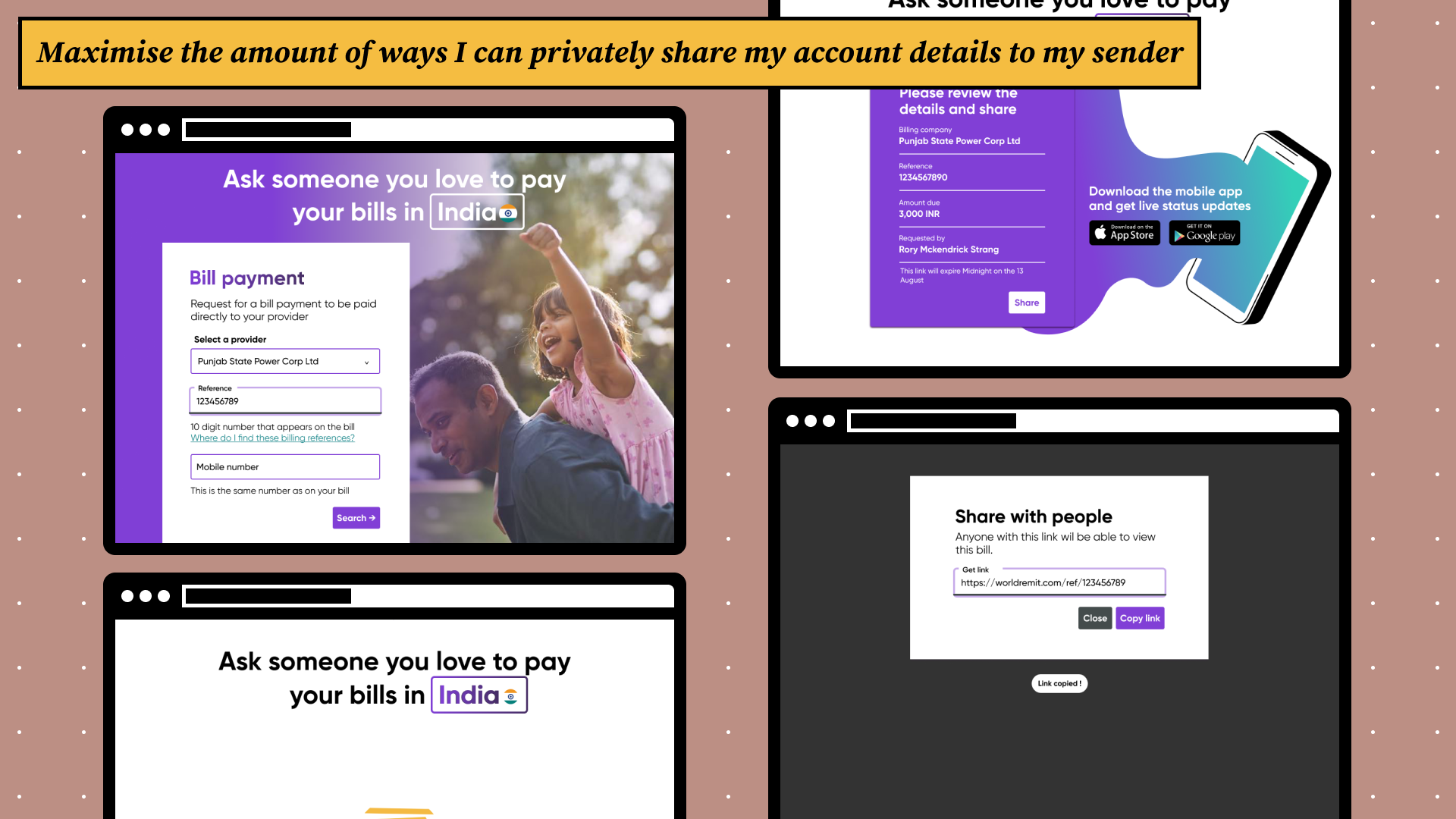
Figure 19: Search and share
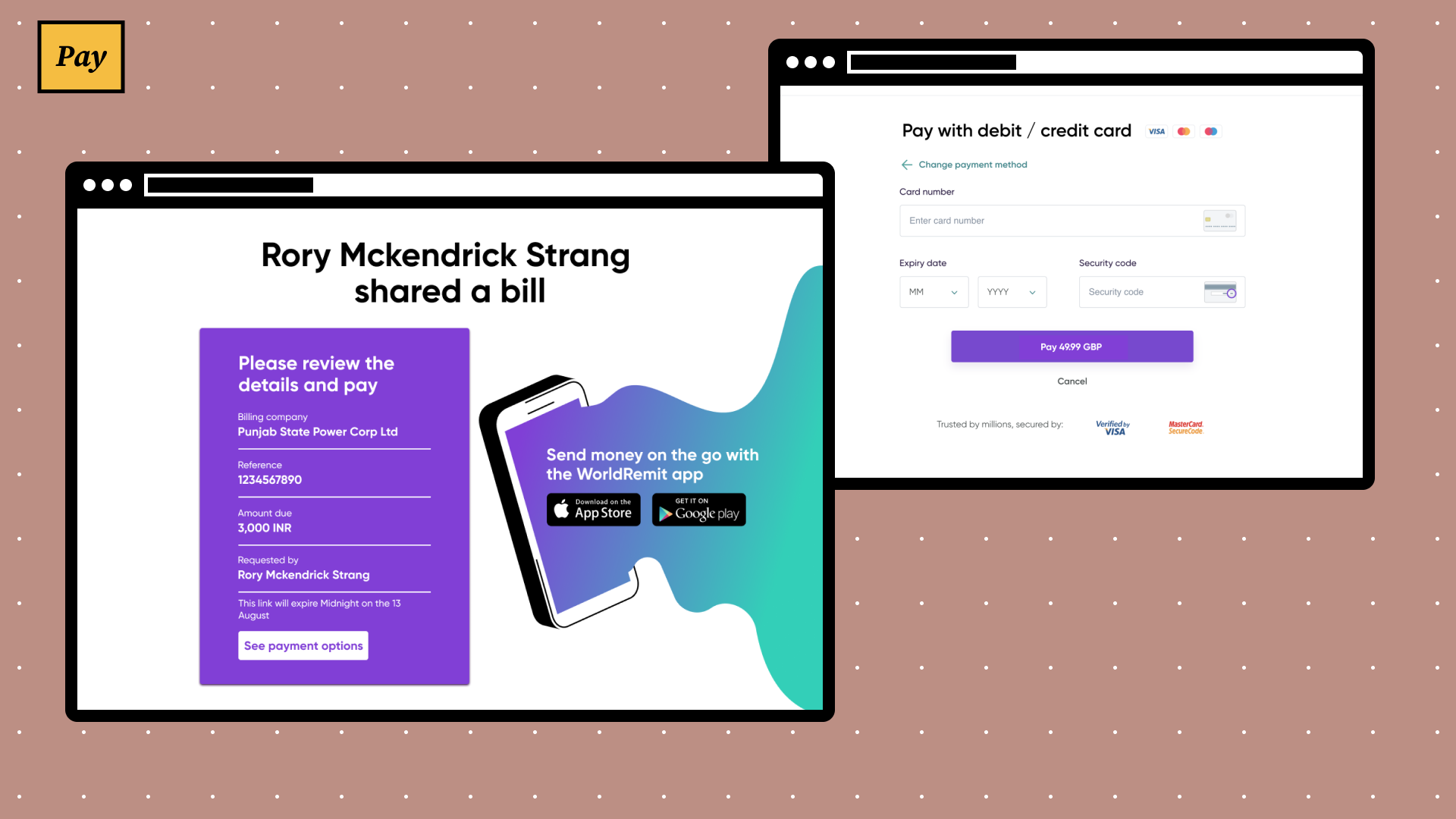
Figure 20: Payment page and portal.